


If your website touches on anything that impacts someone’s money, credibility is everything.
That’s why Google created the Your Money or Your Life (YMYL) classification and made it part of its Search Quality Rater Guidelines. So if you’re in fintech, these guidelines directly affect how your content ranks in search.
Let’s go over exactly what YMYL means, why Google applies such strict standards to it, and how you can align your content strategy with these expectations.
TL;DR
- YMYL SEO applies to content that can impact someone’s money, safety, or well-being, which means Google holds financial services brands to far stricter quality standards.
- To rank, YMYL content must demonstrate accuracy, clear sourcing, genuine expertise, and up-to-date information.
- Google’s Search Quality Rater Guidelines emphasize E-E-A-T, brand reputation, expert authorship, and content that aligns with established consensus.
- Fintech brands need to show trust signals across their whole site through authoritative sources, expert contributors, transparent author bios, disclaimers, and a strong reputation to stay competitive in YMYL search results.
What Is Your Money Your Life SEO?
YMYL SEO refers to search optimization strategies for content that falls under Google’s Your Money or Your Life (YMYL) classification. It affects webpages that, if inaccurate or misleading, could directly impact a person’s finances, health, safety, or well-being.
Google doesn’t treat all content equally, and that’s by design.
If your website directly influences people’s life decisions, Google scrutinizes your content more heavily. That means:
- Higher expectations for factual accuracy
- Clear sourcing
- Up-to-date information
- Real expertise
Some topics, like investment advice or mortgage rates, are clearly YMYL. Others, like hobby blogs or entertainment sites, fall outside that scope. Many land somewhere in the middle.
YMYL has been quietly shaping SEO since 2013.
But the surge in AI-generated content, coupled with Google’s algorithm updates, sets a higher bar for YMYL content.
Google expects content in this category to be accurate, authoritative, and above all, trustworthy. If you fail to meet that standard, no amount of keyword optimization will save you in the SERPs.
Why Google Cares About YMYL Content
Google’s core mission is simple: maintain user trust.
When someone searches for financial-related topics, they expect to find accurate, safe, reliable answers. For YMYL topics, the stakes are exponentially higher.
If Google served up misleading information on “best ways to invest retirement savings,” for example, the consequences could be catastrophic not just for the individual user, but for Google’s own reputation.
There’s also a financial incentive.
YMYL categories include some of the highest-value keywords in Google Ads. Think of terms like “auto insurance” or “student loan refinancing.” These are goldmines for advertisers (and for Google). That’s why Google needs to keep the search experience safe, high-quality, and trustworthy.
SEO for fintech brands needs to treat every piece of content as if lives depend on it.
Google’s Search Quality Rater Guidelines for YMYL
Google uses its own Search Quality Rater Guidelines, which guide human evaluators when rating search results. These aren’t ranking factors, but they do help to train Google’s algorithm.
There are several moving parts to the Search Quality Rater Guidelines:
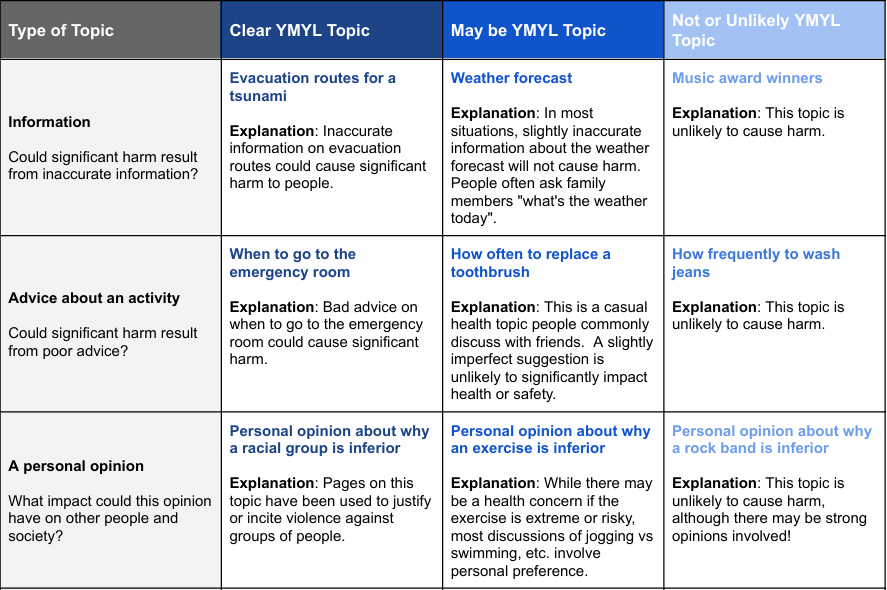
Defining a YMYL topic
Google acknowledges that YMYL exists on a spectrum.
Some topics, like how to choose an investment platform, are clearly YMYL. Others, like a blog post summarizing student loan news, may fall into a gray area.
What matters most is the content’s intent and its potential impact on the user.
Page Quality and Content Accuracy
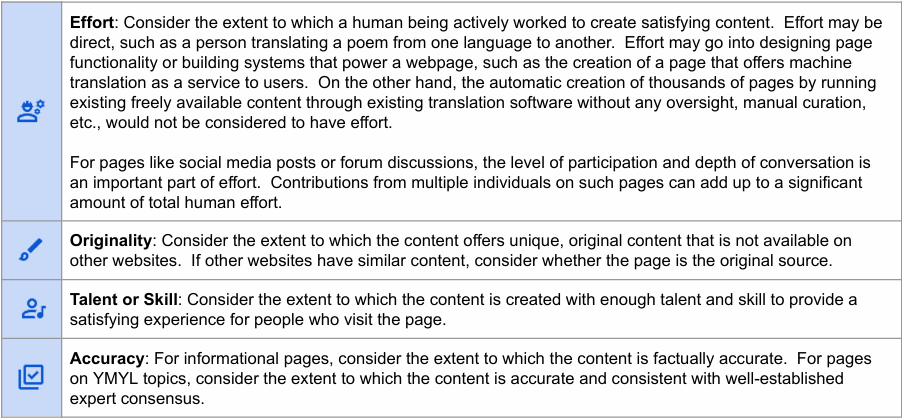
The guidelines steer raters to focus on how content aligns with expert consensus. Pages should be informative, demonstrate trust, and be free of sensationalism or misleading claims.
Your content should fulfill its intended purpose, especially if that purpose could affect a user’s decision-making around money.
Here are some of the quality signals raters look for:
Reputation and Trustworthiness
For YMYL sites, a positive reputation is essential, including what third parties say about you. Raters seek out external references, reviews, and mentions to validate a brand’s credibility.
For example, a financial site endorsed by the U.S. Department of Health and Human Services gets high marks. A site with poor reviews or no visible reputation at all? Not so much.
If there’s little external validation, raters are told to scrutinize other quality signals even more closely.
E-E-A-T
E-E-A-T (Expertise, Experience, Authoritativeness, and Trust) is Google’s gold standard for evaluating content quality, especially for YMYL pages.
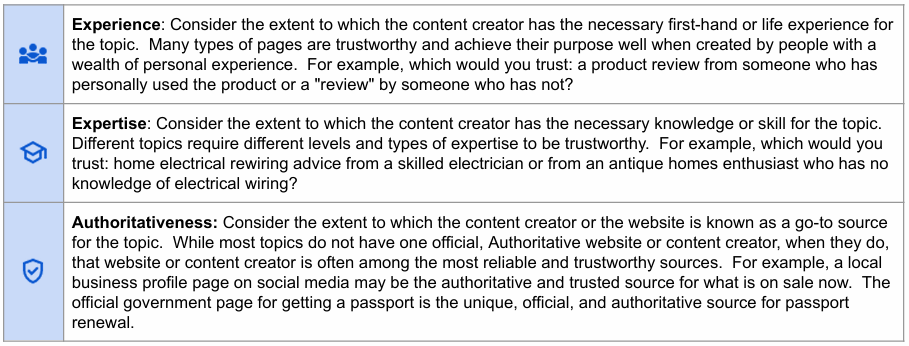
For these topics, formal expertise is expected. That means credentials, licensure, or professional background in a subject matter.
5 YMYL SEO Signals and Strategies in Fintech
If you’re a fintech brand, SEO goes beyond keywords and link-building. Your content should prioritize trust, accuracy, and transparency to meet Google’s higher expectations.
These SEO signals make a difference in YMYL content:
Source Information to First Parties
If you’re writing about interest rate trends, payment processing fees, or crypto regulation, cite your sources. Not just any source, but the original source.
For example, if you mention the current U.S. interest rate, link directly to the Federal Reserve’s official site, not to a blog post summarizing it. This shows Google and your audience that your content is trustworthy, well-informed, and up to date.
Even if you’re linking to a competitor’s report, that’s okay. If it improves the user experience and reinforces accuracy, link away.
Demonstrate Fintech Expertise
Bring real-world voices into your content, as subject-matter expertise builds trust.
Quote certified financial planners, wealth managers, compliance officers, or even other fintech founders. For example, if you’re writing about buy-now-pay-later trends, include expert commentary from someone in that sector who has firsthand experience with regulatory or operational changes.
Think like a journalist. Find sources by reaching out on LinkedIn or partnering with contributors.
Hire Writers with Fintech Experience
Your writers should know the difference between ACH and RTP, understand how APIs work in embedded finance, and speak fluently about financial compliance.
For fintech sites, it’s not enough to hire generalist writers. Hire experts who have worked in or written extensively for the fintech space. These are people who understand the complexities of consumer finance, neobanking, crypto, or B2B payments.
Clearly Display Author Details
Google’s raters want to know who wrote your content and whether they’re qualified to do so. Make it easy for them.
At a minimum, include a byline with a clickable author profile. Even better, feature a short bio that highlights the author’s experience, like a CFP credential, past work with Stripe or Chime, or experience building financial literacy campaigns.
The ATM Marketplace blog offers some inspiration:

Author transparency supports trust, and trust is everything in YMYL.
Include the Basics
Fintech users make high-stakes decisions about mortgages, investments, retirement, or business banking. So your site needs to feel safe.
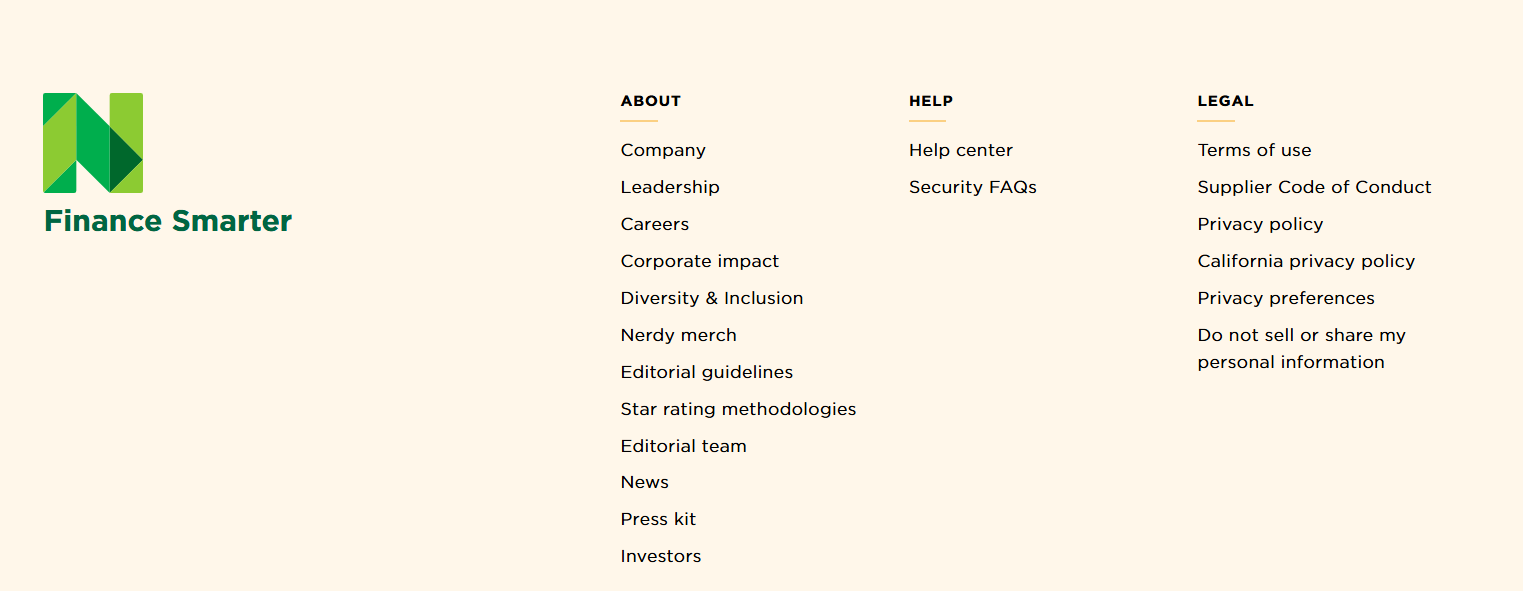
That starts with basics like a robust About page, detailed Terms and Conditions, and regulatory disclaimers when needed. A Press page that highlights media mentions or notable partnerships boosts your brand’s authority.
NerdWallet combines these and others in its website’s footer:
As for supplementary content, think through the full user experience. Add:
- A clear navigation bar to easily find relevant content or product details
- FAQs for transparency and clarity around key financial questions
- Editorial guidelines to show how you choose to publish and fact-check content.
- Contact info for real people, especially important if you offer products or services
If your site includes ads or affiliate links, make sure they don’t disrupt the user experience or undermine your core message.
Trust the Experts in YMYL SEO for Fintech Content
For YMYL topics, Google is scrutinizing your entire online presence, including your authority, expertise, accuracy, and trust signals at every level. That means your SEO strategy can’t be outsourced to just anyone with a basic understanding of keywords or meta tags. It demands more.
If you’re serious about competing in YMYL spaces, you need seasoned professionals who understand how to write and build trust with search engines and your target audience.
Get in touch with us today, and we’ll design an effective SEO strategy for your fintech business.
