



For many fintechs, keyword research follows a frustrating pattern: lots of search volume, very little business value.
Ranking for terms like “What is a neobank?” might look impressive on a dashboard, but you need to ask whether it’s moving anyone closer to a sign-up, demo, or deal.
In many cases, the answer is no.
Fintech keyword research isn’t just about driving traffic to your site. No, it’s about driving revenue.
That starts with knowing where to look for keywords that signal intent, pain points, and a ready-to-buy mentality. And that’s not always obvious. Some of your highest value keywords won’t show up in your favorite keyword tool. Instead, they’re hiding in plain sight if you know where to focus.
Keep reading to learn eight real-world strategies for uncovering keywords that actually matter. These are the ones tied to sales conversions, onboarding moments, and product-switching behavior.
TL;DR
- Keywords should drive the right traffic that leads to revenue.
- The best keywords hide in plain sight. Check online reviews, sales call transcripts, Google Ads, and your competitors’ content.
- Understand what makes your customers choose you (the real problems you solve for them).
- Choose keywords that highlight every stage of the customer journey and think beyond your basic function to include other use cases.
Analyze Reviews for Fintech Keywords
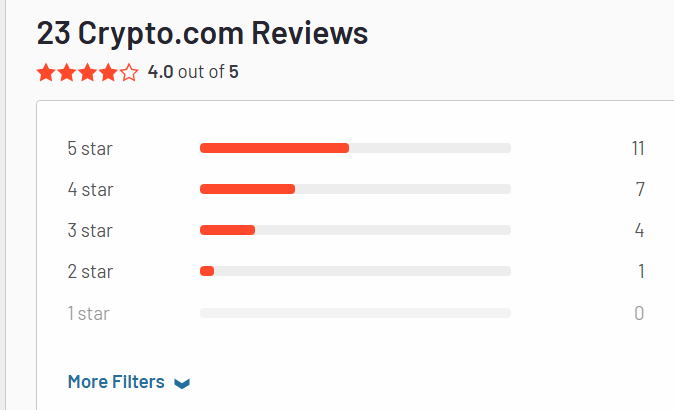
Fintech users aren’t shy about their opinions, and they say the quiet parts out loud on review sites.
Reviews are packed with insight into what your users care about, what they’re searching for, and the exact language they use when describing your product.
Platforms like G2, Capterra, GetApp, and TrustRadius are treasure troves of information. You might even find threads on Reddit or X, especially if your product serves a niche like crypto or cross-border payments.
Source: G2
Checking these sites lets you reverse-engineer your keyword research. These words are already rooted in user demand.
Here’s how to apply this method:
- Aggregate all of your reviews: Pull reviews from every source you can find, including product listings, social threads, app stores, and anywhere users leave feedback. Then, put them all in one place, like a spreadsheet.
- Visualize recurring themes: Use a tool like WordItOut or MonkeyLearn to create a tag cloud or heat map of common words and phrases. Look for patterns like “ACH transfer limits,” “syncing with QuickBooks,” or “spending insights.” These aren’t just buzzwords. They’re signals of what users value or struggle with.
- Run an n-gram analysis: Use an n-gram analyzer to find frequently used two- or three-word phrases, like “late payment alerts,” “card spending caps,” or “multi-currency wallet.” These long-tail phrases can spark content ideas that keyword tools often miss.
- Do steps 1-3 for competitor reviews: Don’t stop with your own feedback. Peek at your competitors’ reviews: Determine what their users are raving about and what they are frustrated by. This helps you uncover gaps in the market using the language real people use when searching for alternative solutions.
Check Competitor Keywords
One high-converting keyword can move some serious pipeline, and your competitors might already know it.
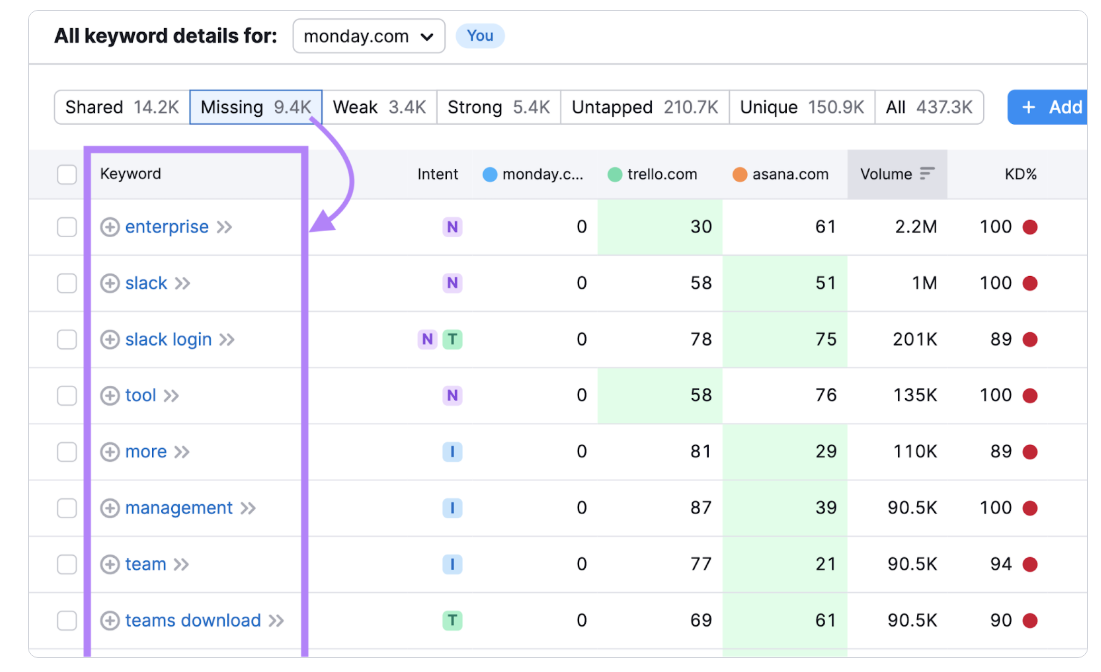
While you can’t peek inside your competitor’s Google Search Console, a keyword gap analysis gives you the next best thing. It helps you spot what they’re ranking for that you’re not, and whether those gaps are worth closing.
Source: Semrush
Tools like Ahrefs, Semrush, or SpyFu let you plug in your domain alongside your top competitors, including direct (solving the same problem) and indirect (ranking for similar use cases or audience).
You’ll get a list of keywords where your competitors show up and you don’t.
Next, qualify those keywords:
- Is this term tied to a key financial job to be done?
- Does it indicate switching behavior (e.g. “X alternative,” “best tools for [use case]”)?
- Would ranking for it help drive demo requests, free trials, or signups?
Look for long-tail, high-intent keywords like:
- “prepaid card for small business payroll”
- “how to automate invoice reconciliation”
- “Stripe vs Square for international payments”
These are the kind of queries that signal decision-making mode, and those are the ones worth competing for.
Review Sales Call Transcripts
Your next high-converting keyword is hiding in a conversation you’ve already had.
Sales conversations are where real buying behavior gets verbalized, and you’re likely to find high-intent, bottom-of-funnel keyword inspiration.
Your prospects are telling you, in their own words, why they started searching, what problems they’re trying to solve, and how they’re evaluating tools like yours.
You just need to listen, or better yet, transcribe and analyze.
Source: Fireflies.ai
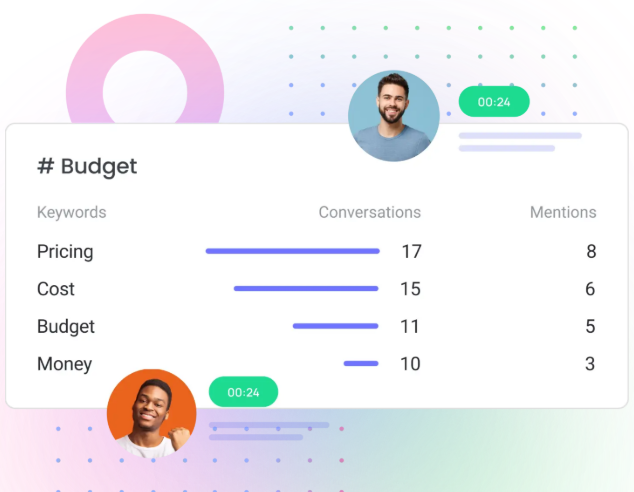
Tools like Gong, Fathom, or Fireflies.ai can automatically record and transcribe your sales conversations. Once you’ve got transcripts, segment the calls into buckets like:
- Revenue-generating deals: What language led to a closed win?
- MQLs and SQLs: What questions did mid-funnel prospects ask?
- Churned or lost deals: What was missing from the conversation?
Scan for repeated pain points and phrases like:
- “We’re trying to get away from manual reconciliation.”
- “I need something that works for multi-entity reporting.”
- “How does this integrate with our ERP?”
Your sales team talks to potential customers more than anyone else. Ask your top reps what phrases they lean on, what objections they hear most often, and how buyers are describing their challenges. Their messaging (and hidden keywords) resonate more deeply than anything your keyword tools can tell you.
Connect Your Solutions with User Goals
Your fintech product likely does more than your homepage gives it credit for. Users are constantly finding new ways to make it work for them, and every unique use case is a potential SEO opportunity.
Instead of narrowing your content strategy to just your core features, dig into the different tasks your product handles. Some may surprise you. Others may unlock entire keyword clusters you hadn’t considered.
Here are some ways to surface those use cases:
Brainstorm with Your Team
Get product, sales, support, and marketing in the same room and ask: “What are all the ways people are using this tool?”
Give everyone space to prep beforehand and encourage even the out-there ideas. You might find gold in a use case that seems niche at first, but maps to high-intent, low-competition search terms like:
- “How to give employees prepaid spending limits”
- “Tools for startup grant tracking”
- “How to automate per diem payouts”
Mine Reviews
Review sites can be great ways to find your users “jobs to be done.” Look at how users describe the problems your product solved, even if it wasn’t what you were built for.
For example, someone might be using your budgeting tool to split rent with roommates or your payment platform to run payouts for contest winners.
That’s not off-label use, that’s a new SEO angle.
Ask the Audience
A quick survey can surface use cases you hadn’t planned for. Add open-ended questions like:
- “What problem were you trying to solve when you found us?”
- “How are you using [Product Name] today?”
- “Is there anything you use the platform for that surprised even you?”
Pair it with your NPS or post-onboarding surveys to keep it low effort but high insight.
Dig Into Google Ads Performance
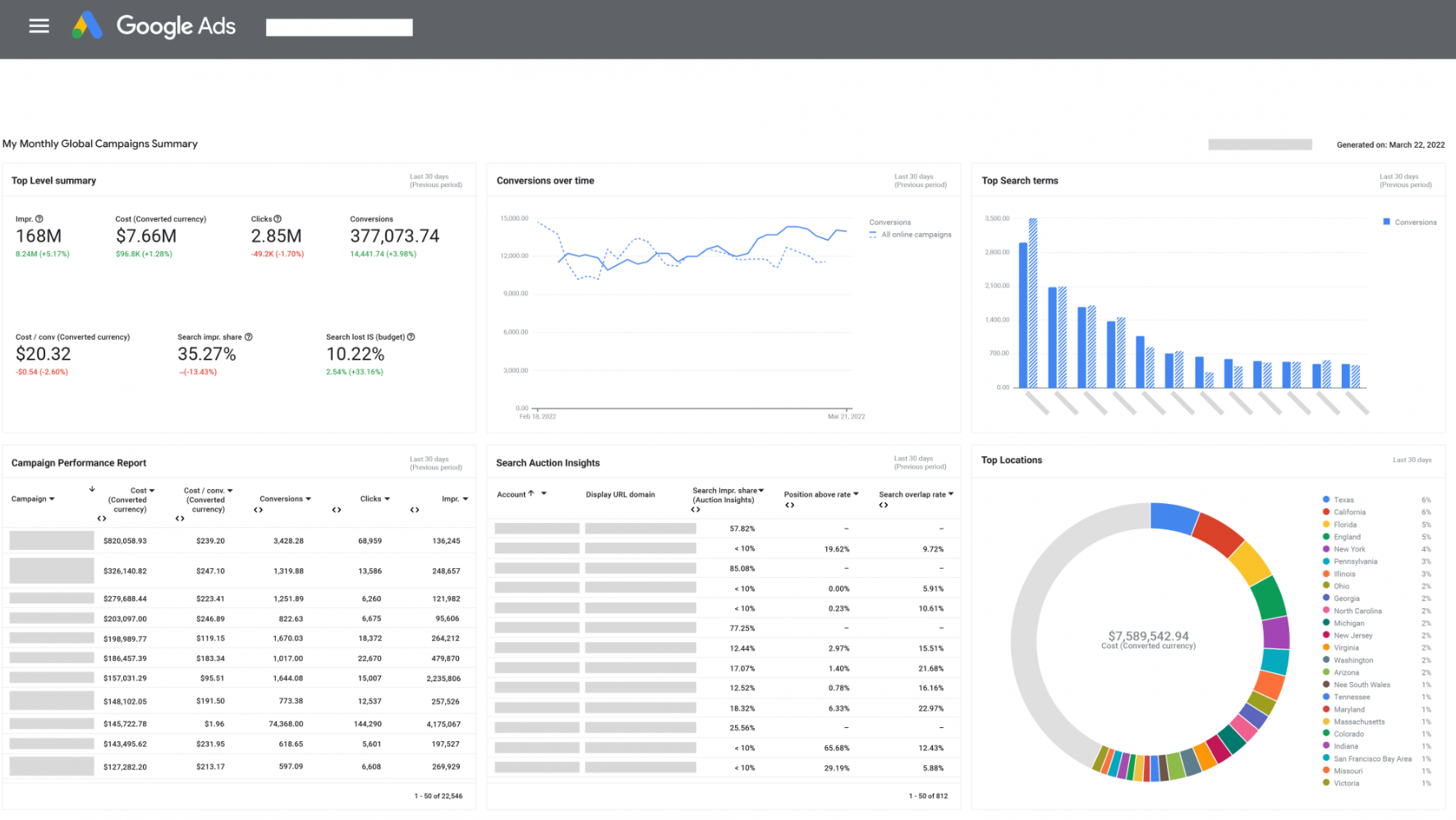
If you’re running paid search campaigns, you’re sitting on a gold mine of real keyword performance data. It’s the kind that goes beyond search volume and straight into revenue territory.
Both SEO and paid search operate in the same arena (a la Google). But one pays for traffic directly, while the other earns it over time.
That means paid search results give you a fast-forward view of which keywords get people to click. Those are the keywords you need to chase.
Source: Search Engine Roundtable
Here’s how:
Find Keywords that Actually Convert
Review the top-performing search terms from your recent campaigns. These aren’t just the ones with high click-through rates, but the ones that drive MQLs, activations, or new revenue.
These are the keywords tied to serious buying intent, and your classic keyword tools like Ubersuggest or Google Keyword Planner might not surface them.
If a keyword is converting well in paid search, that’s your signal: build content around it, and target it organically. These are the terms your future customers are using when they’re ready to act, not just browse.
Forecast Organic Impact with Real Data
Use your paid conversion data to set SEO benchmarks. If a keyword converts at 4% via paid search, it gives you a rough idea of how much organic traffic you can drive to a well-optimized page.
This also helps you decide where to invest first, especially if resources are limited.
Trade Vanity Metrics for Revenue Signals
Surface-level numbers like leads or sign-ups are distractions. In fintech, it’s deeper-funnel actions that matter. Keywords should be evaluated not just by search volume, but by:
- Search intent: Does the query suggest someone is ready to evaluate, compare, or buy?
- Search specificity: Is the user asking about a feature, use case, or competitor? That’s gold.
- Ranking difficulty: Can you realistically compete on this term without stretching your budget or timeline?
- Strategic alignment: Does this keyword connect directly to your product’s strengths or a common switching point?
If you’re not checking your Google Ad (or other PPC) data religiously, it’s time to start.
Understand the Customer Journey
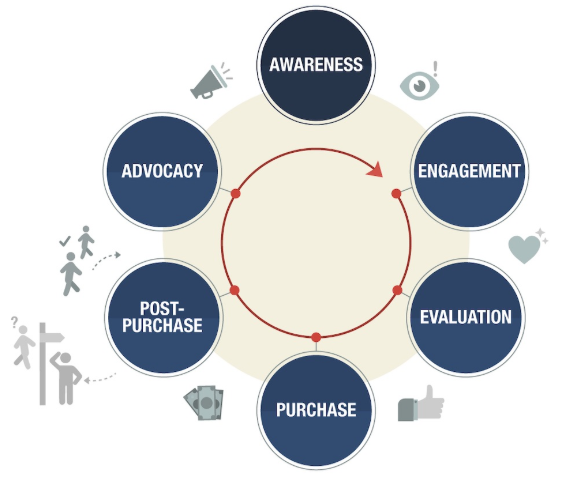
If you want to uncover revenue-generating keywords, you need to understand what triggers someone to start searching in the first place. What pain, inefficiency, or realization makes them think, “I need a better way to do this?”
Source: Ceaksan.com
Mapping that journey helps you do two powerful things with your SEO:
- Attract net-new, high-intent leads who are just beginning to look for answers.
- Influence warm leads already in your funnel by giving them the exact info they need to convert.
Start with your CRM. Dive into the paths real users have taken, from first click to closed deal. Which blogs, tools, webinars, or help docs did they engage with before becoming an MQL, SQL, or paying customer?
If you’re using HubSpot, this is a breeze with content attribution reports. For other CRMs, try tracking based on UTMs, session replays, or content consumption tied to pipeline movement.
Different lead types follow different content patterns:
- Top-funnel visitors engage with guides like “How to manage startup spending without spreadsheets.”
- Mid-funnel leads go deeper into content like “Prepaid business cards vs traditional credit cards.”
- Bottom-funnel buyers read case studies, pricing pages, and detailed product comparisons.
Once you identify these touchpoints, reverse-engineer the keywords behind them. Which phrases brought users to these pieces of content? Which ones consistently appear across multiple successful journeys?
From there, double down:
- Create supporting content for those high-converting pages
- Target adjacent keywords and FAQs
- Optimize CTAs to nudge users further down the funnel
Pro tip: Run a keyword gap analysis to find content sitting just off page one. A few smart optimizations could turn it into a top-performer.
When your SEO strategy reflects the entire customer journey (not just traffic goals), you’ll start generating leads that convert faster, cost less, and stick around longer.
That’s how fintech content pulls real weight.
Know What Entices Customers to Switch or Act
There are two types of switch moments to target in your SEO strategy.
Both are packed with high intent. Both signal that your prospect is ready to act. And both can uncover keywords that don’t always show up in traditional research tools but lead directly to conversions.
Switching From Manual Methods
These users aren’t ditching a competitor, they’re ditching Excel. Or PDFs. Or a handwritten ledger. In other words, they’re moving from manual to modern.
Think keywords like:
- “Invoice template for freelancers”
- “How to split expenses with roommates”
- “Track payroll in Google Sheets”
This is your chance to educate, not sell. Build content that meets them where they are and gently introduces your product as a smarter, faster, more secure alternative.
Mapping out these switch moments helps you speak directly to problem-aware users who just haven’t realized there’s software that can solve it for them.
Switching From Another Fintech Platform
The second type of switch moment comes from users actively looking to move off a competing tool. These folks are hot leads. They’ve already adopted software. They’re just not happy with it.
That’s your cue to build out content around:
- “[Competitor] alternative”
- “[Competitor] vs [Your Brand]”
- “Best [product category] for [specific audience or use case]”
For these moments, proceed with care. This is a high-stakes SERP. Accuracy and transparency matter here more than anywhere else.
Instead of slinging comparisons or making bold claims, let the customers do the talking. Pull in third-party reviews from sites like G2 or Capterra to show where your product wins on pricing, features, or support.
Reach Out If You Need Help With Keyword Research
Keyword research methods like these have helped our fintech clients go from chasing rankings to generating quality leads via organic search. While SEO is typically a long game, many of our clients have achieved some quick wins with these methods, and these wins keep compounding over time.
Our agency can help you implement these and other keyword strategies to improve your SEO. Get in touch to learn more.
